
The Study of Expectancy in Visitor Experience
Anticipation shapes how users perceive electronic products before engagement takes place. The person’s organ persistently forecasts outcomes grounded on visual cues, interface structures, and previous interactions. This mental mechanism impacts fulfillment measures and participation extent. Creators utilize anticipation to establish emotional ties between customers and items. Comprehending cognitive processes behind expectation enables teams to develop designs that feel instinctive and gratifying in casino non aams.
Why expectancy signifies before a customer even takes action
The second a customer faces an system, the organ commences creating anticipations about potential interactions. These cognitive anticipations occur milliseconds before any press or tap happens. Cognitive mechanisms examine visual organization, color palettes, and positional relationships to determine what steps might yield intended outcomes.
Investigation demonstrates that obvious visual indicators decrease mental load by validating customer casino non aams expectations. When button placement corresponds to learned structures, customers encounter decreased friction. The difference between forecasted and actual outcomes determines satisfaction measures after engagement completes.
Anticipatory phases also activate incentive pathways in the mind. Chemicals discharge during anticipation stages, generating affective commitment before results emerge. This neurological response illustrates why well-designed processing phases keep involvement better than blank interfaces.
How anticipation forms affective response in electronic items
Affective feelings to electronic offerings originate from the connection between what users predict and what really occurs. When outcomes match with predictions, customers feel fulfillment and faith. Mismatched predictions trigger disappointment that impairs item perception. The affective effect depends on expectation accuracy rather than feature level solely.
Positive shocks occur when products outperform expected functioning levels. A faster-than-expected processing period creates joy because the mind prepared for extended pause periods in casino online non aams. Unanticipated beneficial features create positive psychological surges that create favorable connections with offerings.
Negative affective reactions emerge when systems break established cognitive patterns. A button that appears interactive but remains disabled produces letdown. Transition speeds that differ from platform conventions feel disruptive. These breaches rupture mental understandings between visitors and platforms.
The function of unpredictability in keeping users cognitively absorbed
Unpredictability serves as a strong engagement system when calibrated correctly within digital interactions. Full foreknowledge causes casino non aams to tedium, while undue unpredictability causes stress. The ideal unpredictability amount sustains concentration without overloading mental reserves. Intentional uncertainty maintains customers intrigued about outcomes and invested in exchange processes.
Gamification mechanisms illustrate how regulated uncertainty sustains attention over prolonged periods. Changing prize sequences create more powerful behavioral designs than fixed consequences. Users keep engaging because they cannot predict exact results, yet they expect that positive results remain feasible.
Effective unpredictability implementation obeys specific principles:
- Supply obvious parameters around variable parts so customers comprehend which aspects continue constant
- Sustain stability in core movement designs while adding variability in information or rewards
- Apply progressive revelation to show details incrementally rather than overwhelming customers immediately
Why pause can heighten attention rather than of diminishing it
Pause intervals can amplify user interest when designed with psychological rules in mind. The mind allocates greater importance to consequences that need exertion or perseverance to achieve. Prompt fulfillment often creates less strong psychological reactions than deferred prizes. This consequence arises from expectancy creating emotional investment during waiting periods.
Temporal separation enables customers to imagine perfect results without confronting real-world restrictions. During pause intervals casino online non aams, cognitive simulations lean toward positive scenarios that boost perceived importance. A product coming after several periods feels more valuable than equivalent goods obtained immediately.
Strategic waits also transmit quality and uniqueness indicators. Time-bound deals merged with expiration timers leverage scarcity psychology to intensify interest. Customers understand delay conditions as indicators of high interest or exceptional quality.
How systems produce a sense of what follows next
Interfaces communicate future phases through graphical vocabulary that guides user predictions. Pointing signals like arrows, animation trajectories, and positional configurations signal upcoming shifts. These visual elements produce mental models of consequential relationships within virtual mechanisms.
Color alterations and hover states preview engaging potentials before commitment occurs. A control shifting shade on mouseover validates pressability and indicates reactivity. Unresponsive parts look grayed out to signal unavailability. These graphical changes teach users migliori casino non aams to detect designs that predict system conduct.
Ordered browsing designs establish flow and certainty in visitor paths. Breadcrumb trails show completed actions and remaining stages concurrently. Staged questionnaires display progress bars that predict completion proximity. Each part provides to chronological consciousness that aids visitors forecast workflow duration and next necessary actions.
Microinteractions as initiators of expectation
Microinteractions serve as anticipatory cues that prepare customers for system responses. These small moving feedback loops verify input acknowledgment and suggest at processing operations. A button press that triggers a wave effect conveys confirmation before the primary action completes. Such instant feedback avoids ambiguity about whether the platform registered visitor intent.
Pull-to-refresh motions illustrate how microinteractions create expectation through incremental unveiling. The stretching movement during the swipe stage creates prediction for new material. Visual strain builds as customers swipe down, then dissipates when the update limit triggers. This physical analogy converts delay into an active participatory experience rather than detached viewing.
Effective small interactions incorporate multiple predictive elements:
- Entrance movements that preview information coming before components entirely appear on interface
- Loading wheels with fluctuating rates that suggest execution difficulty and estimated finishing period in migliori casino non aams
- Tactile feedback that validates touch acknowledgment and previews move outcomes through pulse sequences
- Auditory indicators that reinforce sight-based feedback and generate multi-modal expectation of consequences
The connection between expectancy and prize interpretation
Expectation intensifies prize perception through biochemical procedures that start before consequences manifest. Dopamine discharge takes place during prediction phases rather than exclusively upon prize receipt. This indicates the process toward a goal creates enjoyment autonomously of the endpoint. Systems that prolong expectant intervals can enhance total contentment exceeding what the real reward produces.
The contrast between predicted and obtained incentives dictates psychological magnitude. When consequences surpass anticipations, visitors migliori casino non aams feel heightened satisfaction that strengthens offering bond. Oppositely, rewards coming under of predictions seem unsatisfying even when measurably precious.
Changing prize scheduling produces more robust anticipatory reactions than foreseeable timings. Alert mechanisms that come at irregular gaps sustain elevated involvement than set-time messages. The unpredictability preserves attention because customers cannot adapt to known designs.
How advancement signals shape drive and endurance
Advancement signals change conceptual pause intervals into solid sight-based experiences that maintain user determination. A buffering indicator communicates both current status and remaining duration, enabling visitors to reach educated decisions about continuing or abandoning activities. Observable advancement produces cognitive momentum that motivates task conclusion.
The target-nearness impact explains why visitors speed up attempts as progress signals near finishing. Sight-based closeness to destinations causes increased engagement and endurance. A progress meter at 80% feels substantially nearer to conclusion than one at 20%, even when actual duration remaining continues identical.
Segmented advancement displays decrease perceived exertion by dividing substantial jobs into lesser milestones. A five-step process with finished steps highlighted appears more manageable than a lone seamless bar. Each finished section provides mini-incentives that preserve drive across prolonged workflows casino online non aams.
Affective tempo in user experiences
Affective pacing arranges the rhythm of expectation and resolution across customer journeys. Designers control intensity fluctuations by switching between high-involvement instances and rest periods. A well-paced journey prevents psychological fatigue while maintaining sufficient engagement to sustain curiosity.
Onboarding processes show successful affective pacing through gradual intricacy introduction. First interfaces offer easy tasks that create assurance through rapid victories. Following stages introduce complex capabilities progressively, allowing customers to predict expertise without sensing swamped.
Payment procedures need careful tempo to sustain buying drive while addressing required obstacles spots. Expectancy grows as customers advance toward payment completion, but too many steps exhaust eagerness. Optimal rhythm merges required information into fewest stages while employing progress signals to emphasize closeness to objective attainment in casino non aams.

Top rated products
-
 Raj swadist churan
Original price was: ₹250.00.₹200.00Current price is: ₹200.00.
Raj swadist churan
Original price was: ₹250.00.₹200.00Current price is: ₹200.00.
-
 Dell Inspiron 3530 Thin & Light Laptop, 13th Gen Intel Core i3-1305U/8GB/512GB SSD/15.6" (39.62cm) 120Hz Refresh Rate on a FHD IPS Display/Windows 11 + MSO'21+McAfee 15 Month/Carbon Black/1.62kg
Original price was: ₹47,621.00.₹37,886.00Current price is: ₹37,886.00.
Dell Inspiron 3530 Thin & Light Laptop, 13th Gen Intel Core i3-1305U/8GB/512GB SSD/15.6" (39.62cm) 120Hz Refresh Rate on a FHD IPS Display/Windows 11 + MSO'21+McAfee 15 Month/Carbon Black/1.62kg
Original price was: ₹47,621.00.₹37,886.00Current price is: ₹37,886.00.
-
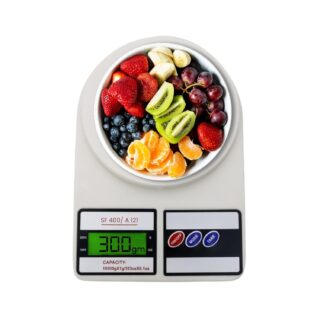 Atom 10Kg Kitchen Weight Machine 6 Months Warranty, Digital Scale with LCD Display, Scale for Home Baking, Cooking & Balance Diet. Weighing Machine with capacity 10Kg
Original price was: ₹599.00.₹205.00Current price is: ₹205.00.
Atom 10Kg Kitchen Weight Machine 6 Months Warranty, Digital Scale with LCD Display, Scale for Home Baking, Cooking & Balance Diet. Weighing Machine with capacity 10Kg
Original price was: ₹599.00.₹205.00Current price is: ₹205.00.
-
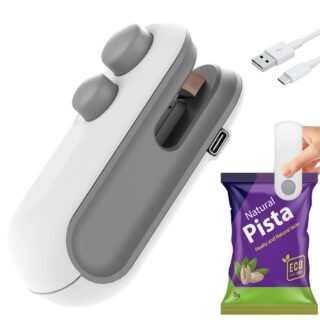 Wazdorf Sealing Clip - Portable Mini Sealing Machine Handheld Packet Sealer for Food, Snacks, Chips, Fresh Storage, Plastic Bag Sealing Machine, Multicolor
Original price was: ₹999.00.₹249.00Current price is: ₹249.00.
Wazdorf Sealing Clip - Portable Mini Sealing Machine Handheld Packet Sealer for Food, Snacks, Chips, Fresh Storage, Plastic Bag Sealing Machine, Multicolor
Original price was: ₹999.00.₹249.00Current price is: ₹249.00.
-
 Raxon Innovation PVC Door Guard (39 Inches, Pack of 5) Gap Filler for Door Bottom Seal Strip - Sound-Proof, Reduce Noise, Energy Saving Door Stopper for Reduce Door Dust, Door Guard for Home(Brown)
Original price was: ₹699.00.₹199.00Current price is: ₹199.00.
Raxon Innovation PVC Door Guard (39 Inches, Pack of 5) Gap Filler for Door Bottom Seal Strip - Sound-Proof, Reduce Noise, Energy Saving Door Stopper for Reduce Door Dust, Door Guard for Home(Brown)
Original price was: ₹699.00.₹199.00Current price is: ₹199.00.