
The Psychology of Expectancy in User Journey
Anticipation forms how users perceive electronic products before contact takes place. The human organ persistently predicts results based on graphical hints, interface patterns, and earlier experiences. This psychological mechanism impacts contentment degrees and involvement intensity. Creators harness expectancy to forge feeling-based ties between users and offerings. Comprehending mental systems behind anticipation permits crews to construct designs that seem instinctive and rewarding in newgioco.
Why expectancy signifies before a visitor even executes move
The instant a visitor encounters an system, the brain starts developing anticipations about potential engagements. These mental anticipations happen milliseconds before any press or press happens. Psychological mechanisms analyze visual hierarchy, color arrangements, and geometric relationships to determine what moves might produce intended results.
Research demonstrates that obvious graphical signals diminish psychological load by verifying user newgioco anticipations. When control positioning matches acquired structures, customers face lowered friction. The distance between forecasted and actual outcomes determines contentment measures after engagement finishes.
Expectant states also trigger incentive networks in the organ. Chemicals release during expectation phases, forming emotional investment before consequences materialize. This neurological response clarifies why well-crafted buffering phases sustain involvement better than void displays.
How expectation shapes emotional reaction in digital products
Affective responses to electronic products originate from the association between what users predict and what actually occurs. When consequences align with forecasts, visitors encounter contentment and confidence. Conflicting anticipations trigger irritation that harms offering view. The affective influence depends on prediction precision rather than feature quality alone.
Favorable shocks occur when products exceed predicted functioning degrees. A faster-than-expected loading period creates pleasure because the organ braced for prolonged pause periods in new gioco. Surprising helpful functions create beneficial emotional spikes that create beneficial links with products.
Adverse emotional reactions surface when interfaces violate established mental patterns. A control that appears clickable but remains inactive generates letdown. Transition speeds that differ from platform conventions seem unsettling. These infractions break cognitive contracts between customers and mechanisms.
The part of uncertainty in keeping users psychologically involved
Uncertainty serves as a potent involvement mechanism when balanced appropriately within virtual interactions. Complete certainty results in newgioco to boredom, while extreme variability produces stress. The optimal uncertainty amount preserves focus without swamping mental capacities. Deliberate ambiguity keeps users interested about results and engaged in interaction processes.
Gamification mechanisms demonstrate how controlled unpredictability maintains involvement over lengthy durations. Changing prize timings create more robust behavioral structures than static consequences. Users persist participating because they cannot forecast specific consequences, yet they expect that positive consequences continue achievable.
Productive uncertainty application follows specific guidelines:
- Provide clear boundaries around unpredictable elements so visitors grasp which aspects stay stable
- Preserve stability in central navigation designs while adding variation in material or rewards
- Use gradual exposure to expose data progressively rather than overloading visitors at once
Why delay can amplify attention as opposed to of weakening it
Waiting durations can enhance visitor curiosity when designed with psychological guidelines in mind. The brain allocates increased importance to consequences that need work or endurance to acquire. Prompt gratification often creates less strong emotional answers than deferred prizes. This impact stems from expectancy building emotional involvement during delay durations.
Temporal distance permits customers to imagine perfect outcomes without encountering real-world limitations. During delay durations new gioco, cognitive projections incline toward hopeful outcomes that enhance perceived value. A item appearing after several days feels more valuable than identical goods acquired at once.
Intentional pauses also transmit quality and selectivity cues. Limited-time offers paired with countdown clocks leverage shortage psychology to intensify interest. Visitors perceive waiting requirements as signs of high interest or excellent quality.
How interfaces produce a feeling of what follows subsequently
Designs communicate upcoming conditions through visual communication that guides user predictions. Oriented signals like arrows, movement trajectories, and geometric layouts signal upcoming transitions. These interface elements generate cognitive models of causal connections within virtual platforms.
Hue alterations and mouseover states preview responsive potentials before engagement takes place. A control changing color on hover validates clickability and indicates feedback. Inactive elements seem grayed out to signal inactivity. These graphical changes train visitors newgioco casino to recognize patterns that anticipate mechanism conduct.
Progressive navigation patterns establish cadence and certainty in visitor paths. Breadcrumb sequences show finished phases and remaining phases at once. Multi-step inputs present progress meters that anticipate conclusion proximity. Individual element provides to chronological awareness that aids users anticipate process length and subsequent necessary steps.
Microinteractions as initiators of anticipation
Microinteractions act as expectant cues that prepare visitors for system answers. These tiny dynamic feedback cycles verify input registration and suggest at computation activities. A button press that activates a ripple result signals recognition before the main action finishes. Such instant acknowledgment avoids uncertainty about whether the system captured customer purpose.
Pull-to-refresh gestures demonstrate how micro-animations build expectation through progressive disclosure. The extending motion during the drag phase generates anticipation for fresh information. Visual pressure builds as visitors drag downward, then discharges when the reload threshold engages. This tangible metaphor changes delay into an active interactive experience rather than detached viewing.
Productive micro-animations include various predictive elements:
- Arrival animations that preview content arrival before elements completely appear on screen
- Processing spinners with changing speeds that indicate execution intricacy and predicted completion duration in newgioco casino
- Haptic acknowledgment that validates tap detection and previews move outcomes through vibration designs
- Auditory signals that strengthen graphical response and generate cross-sensory anticipation of consequences
The connection between expectancy and incentive recognition
Expectancy amplifies prize interpretation through neurochemical mechanisms that begin before outcomes manifest. Dopamine emission occurs during prediction stages rather than only upon reward obtaining. This means the journey toward a target creates pleasure independently of the endpoint. Systems that lengthen predictive periods can boost total fulfillment exceeding what the actual incentive creates.
The contrast between expected and acquired rewards dictates emotional strength. When consequences outperform anticipations, visitors newgioco casino encounter increased enjoyment that strengthens item connection. Oppositely, incentives coming short of anticipations feel disappointing even when factually worthwhile.
Changing incentive timing creates stronger expectant answers than foreseeable schedules. Alert mechanisms that come at varying intervals preserve higher engagement than scheduled messages. The unpredictability sustains focus because visitors cannot habituate to familiar structures.
How advancement signals affect motivation and perseverance
Advancement signals change conceptual pause intervals into concrete visual journeys that maintain user drive. A loading bar transmits both current condition and outstanding timeframe, allowing users to make informed decisions about persisting or abandoning tasks. Observable progress creates mental drive that encourages task completion.
The target-nearness effect illustrates why users accelerate efforts as advancement signals near conclusion. Sight-based nearness to destinations triggers increased attention and endurance. A development indicator at 80% seems significantly tighter to completion than one at 20%, even when total duration remaining remains same.
Segmented development presentations reduce perceived exertion by dividing substantial tasks into smaller checkpoints. A sequential procedure with finished phases marked feels more controllable than a solitary unbroken meter. Each finished segment provides mini-incentives that maintain drive across extended processes new gioco.
Affective pacing in visitor journeys
Emotional rhythm coordinates the cadence of expectation and resolution throughout visitor experiences. Creators control intensity changes by rotating between intense moments and rest intervals. A well-paced path stops psychological exhaustion while preserving adequate engagement to sustain curiosity.
Introduction flows show successful affective rhythm through progressive complexity presentation. First displays offer straightforward jobs that develop confidence through quick victories. Following phases add sophisticated functions gradually, allowing users to predict expertise without feeling swamped.
Purchase processes demand thoughtful pacing to sustain purchase impetus while addressing required obstacles areas. Expectation builds as users move toward payment conclusion, but undue stages drain enthusiasm. Ideal pacing consolidates necessary details into fewest phases while using advancement indicators to emphasize nearness to objective achievement in newgioco.

Top rated products
-
 Raj swadist churan
Original price was: ₹250.00.₹200.00Current price is: ₹200.00.
Raj swadist churan
Original price was: ₹250.00.₹200.00Current price is: ₹200.00.
-
 Dell Inspiron 3530 Thin & Light Laptop, 13th Gen Intel Core i3-1305U/8GB/512GB SSD/15.6" (39.62cm) 120Hz Refresh Rate on a FHD IPS Display/Windows 11 + MSO'21+McAfee 15 Month/Carbon Black/1.62kg
Original price was: ₹47,621.00.₹37,886.00Current price is: ₹37,886.00.
Dell Inspiron 3530 Thin & Light Laptop, 13th Gen Intel Core i3-1305U/8GB/512GB SSD/15.6" (39.62cm) 120Hz Refresh Rate on a FHD IPS Display/Windows 11 + MSO'21+McAfee 15 Month/Carbon Black/1.62kg
Original price was: ₹47,621.00.₹37,886.00Current price is: ₹37,886.00.
-
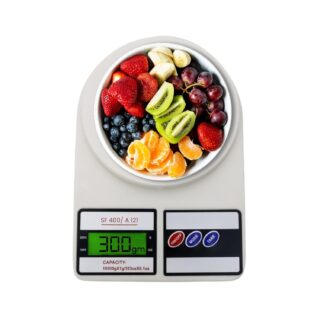 Atom 10Kg Kitchen Weight Machine 6 Months Warranty, Digital Scale with LCD Display, Scale for Home Baking, Cooking & Balance Diet. Weighing Machine with capacity 10Kg
Original price was: ₹599.00.₹205.00Current price is: ₹205.00.
Atom 10Kg Kitchen Weight Machine 6 Months Warranty, Digital Scale with LCD Display, Scale for Home Baking, Cooking & Balance Diet. Weighing Machine with capacity 10Kg
Original price was: ₹599.00.₹205.00Current price is: ₹205.00.
-
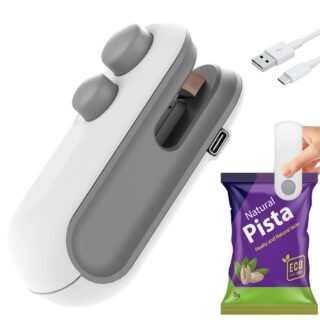 Wazdorf Sealing Clip - Portable Mini Sealing Machine Handheld Packet Sealer for Food, Snacks, Chips, Fresh Storage, Plastic Bag Sealing Machine, Multicolor
Original price was: ₹999.00.₹249.00Current price is: ₹249.00.
Wazdorf Sealing Clip - Portable Mini Sealing Machine Handheld Packet Sealer for Food, Snacks, Chips, Fresh Storage, Plastic Bag Sealing Machine, Multicolor
Original price was: ₹999.00.₹249.00Current price is: ₹249.00.
-
 Raxon Innovation PVC Door Guard (39 Inches, Pack of 5) Gap Filler for Door Bottom Seal Strip - Sound-Proof, Reduce Noise, Energy Saving Door Stopper for Reduce Door Dust, Door Guard for Home(Brown)
Original price was: ₹699.00.₹199.00Current price is: ₹199.00.
Raxon Innovation PVC Door Guard (39 Inches, Pack of 5) Gap Filler for Door Bottom Seal Strip - Sound-Proof, Reduce Noise, Energy Saving Door Stopper for Reduce Door Dust, Door Guard for Home(Brown)
Original price was: ₹699.00.₹199.00Current price is: ₹199.00.