
Microinteractions and Behavioral Reinforcement in Digital Solutions
Digital applications rely on minor interactions that shape how users utilize programs. These fleeting moments produce structures that influence choices and actions. Microinteractions function as building components for behavioral structures. cplay joins design choices with psychological rules that fuel continuous use and involvement with digital interfaces.
Why minute engagements have a excessive effect on person actions
Minor interface features produce considerable alterations in how users engage with electronic products. A button transition, buffering marker, or verification notification may seem insignificant, but these components transmit platform status and direct following steps. Users process these indicators subconsciously, building conceptual frameworks of software behavior.
The cumulative influence of several tiny engagements molds general perception. When a product responds reliably to every touch or click, people gain trust. This trust lessens uncertainty and speeds action completion. cplay reveals how minor aspects influence significant behavioral outcomes.
Frequency enhances the effect of these instances. People experience microinteractions dozens of occasions during interactions. Each occurrence reinforces anticipations and bolsters acquired behaviors.
Microinteractions as invisible instructors: how systems educate without instructing
Platforms transmit functionality through visual responses rather than written directions. When a user pulls an item and observes it snap into place, the movement teaches positioning guidelines without text. Hover states display clickable features before tapping happens. These subtle hints lessen the demand for guides.
Learning occurs through direct control and immediate input. A slide motion that displays alternatives educates users about hidden capability. cplay casino shows how systems direct exploration through adaptive features that react to action, building self-explanatory systems.
The science behind strengthening: from routine patterns to instant response
Behavioral science clarifies why particular exchanges turn instinctive. Conditioning takes place when actions yield predictable outcomes that satisfy person goals. Digital platforms cplay scommesse employ this concept by forming close response patterns between interaction and output. Each positive interaction bolsters the link between behavior and result, creating pathways that enable routine development.
How rewards, signals, and actions form recurring patterns
Pattern cycles consist of three parts: cues that begin action, behaviors people perform, and rewards that follow. Alert badges trigger verification action. Launching an app results to fresh material as incentive, establishing a pattern that repeats spontaneously over time.
Why immediate reaction signifies more than intricacy
Velocity of input dictates reinforcement intensity more than sophistication. A simple tick displaying immediately after form completion provides more powerful reinforcement than intricate transition that postpones acknowledgment. cplay scommesse demonstrates how individuals link behaviors with consequences based on temporal proximity, rendering fast responses essential.
Building for iteration: how microinteractions transform actions into habits
Uniform microinteractions produce conditions for habit creation by reducing cognitive demand during repeated activities. When the identical action generates matching feedback every instance, users cease considering intentionally about the sequence. The exchange becomes habitual, demanding minimal cognitive exertion.
Creators refine for recurrence by unifying response structures across comparable behaviors. A pull-to-refresh gesture that consistently triggers the same motion instructs users what to expect. cplay permits creators to develop muscle recall through predictable engagements that individuals execute without intentional thought.
The role of scheduling: why lags diminish behavioral conditioning
Temporal intervals between actions and feedback break the link people establish between source and consequence cplay casino. When a button press requires three seconds to reveal verification, the mind struggles to connect the touch with the result. This lag weakens reinforcement and diminishes recurring action likelihood.
Ideal conditioning takes place within milliseconds of user action. Even slight delays of 300-500 milliseconds diminish observed reactivity, rendering interactions feel separated and unreliable.
Visual and animation indicators that gently direct people toward behavior
Animation design steers focus and implies potential engagements without explicit directions. A throbbing control draws the attention toward main behaviors. Moving sections indicate slide movements are accessible. These graphical cues lessen doubt about next steps.
Color alterations, shadows, and shifts provide cues that render responsive features evident. A element that rises on hover indicates it can be pressed. cplay casino demonstrates how animation and graphical feedback create intuitive channels, guiding people toward targeted behaviors while preserving the perception of autonomous decision.
Constructive vs negative feedback: what truly maintains individuals active
Constructive strengthening encourages ongoing engagement by rewarding desired actions. A success animation after finishing a action creates fulfillment that motivates repetition. Progress indicators showing advancement offer ongoing validation that keeps individuals progressing ahead.
Adverse input, when built inadequately, irritates individuals and destroys interaction. Fault notifications that fault users generate worry. However, productive negative input that directs fix can strengthen learning. A form area that emphasizes missing data and suggests corrections helps people resolve.
The ratio between positive and unfavorable signals affects retention. cplay scommesse reveals how equilibrated input systems accept errors while highlighting progress and effective task completion.
When strengthening becomes manipulation: where to set the boundary
Behavioral conditioning crosses into control when it emphasizes business aims over user welfare. Endless scroll designs that remove organic pause locations exploit cognitive susceptibilities. Alert structures built to maximize app opens regardless of content quality support organizational priorities rather than person needs.
Ethical design respects user freedom and supports genuine aims. Microinteractions should support actions people desire to accomplish, not produce artificial addictions. Clarity about platform behavior and clear exit locations separate useful reinforcement from abusive deceptive techniques.
How microinteractions reduce friction and boost trust
Friction arises when individuals must pause to understand what takes place next or whether their behavior worked. Microinteractions erase these hesitation moments by offering continuous input. A document transfer advancement indicator removes uncertainty about platform function. Graphical acknowledgment of preserved alterations prevents users from duplicating actions needlessly.
Confidence develops when systems react predictably to every interaction. Users build trust in platforms that recognize interaction instantly and convey condition clearly. A disabled control that clarifies why it cannot be pressed prevents bewilderment and guides people toward required actions.
Lessened obstacles speeds task conclusion and reduces abandonment levels. cplay assists creators identify friction moments where extra microinteractions would illuminate application condition and bolster user trust in their actions.
Uniformity as a strengthening mechanism: why reliable responses matter
Reliable platform performance enables individuals to transfer knowledge from one environment to another. When all controls respond with equivalent animations and response sequences, people know what to expect across the entire platform. This uniformity lowers cognitive demand and accelerates interaction.
Variable microinteractions compel users to relearn patterns in different sections. A store button that provides graphical confirmation in one view but remains silent in another generates uncertainty. Normalized replies across similar behaviors bolster conceptual representations and make interfaces seem unified and dependable.
The relationship between emotional reaction and recurring use
Emotional reactions to microinteractions affect whether individuals come back to a platform. Pleasing transitions or gratifying input sounds form positive associations with specific behaviors. These small moments of delight collect over time, creating connection above practical usefulness.
Irritation from inadequately built exchanges drives people away. A loading spinner that appears and vanishes too fast produces worry. Fluid, properly-timed microinteractions generate emotions of control and mastery. cplay casino joins affective design with retention measurements, revealing how feelings during fleeting engagements mold extended utilization choices.
Microinteractions across platforms: preserving behavioral continuity
People anticipate uniform performance when changing between mobile, tablet, and desktop iterations of the same solution. A slide gesture on mobile should translate to an similar engagement on desktop, even if the mechanism changes. Maintaining behavioral structures across systems stops individuals from re-acquiring procedures.
Device-specific modifications must preserve central feedback rules while honoring system standards. A hover state on desktop becomes a long-press on mobile, but both should deliver comparable graphical verification. Cross-device coherence bolsters habit creation by ensuring learned actions stay valid irrespective of platform selection.
Typical design errors that break strengthening structures
Inconsistent input timing disrupts user anticipations and weakens behavioral training. When some actions yield prompt reactions while equivalent actions postpone confirmation, users cannot develop reliable conceptual representations. This variability raises cognitive burden and decreases trust.
Burdening microinteractions with unnecessary animation distracts from main operations. A button cplay that triggers a five-second transition before finishing an behavior irritates individuals who seek prompt outcomes. Simplicity and speed count more than graphical complexity.
Neglecting to deliver input for every person behavior produces confusion. Quiet failures where nothing occurs after a tap leave individuals questioning whether the platform detected action. Absent verification cues disrupt the reinforcement pattern and require people to duplicate behaviors or abandon operations.
How to measure the efficacy of microinteractions in real situations
Activity finishing levels expose whether microinteractions support or impede person objectives. Observing how numerous people successfully finish processes after changes shows direct influence on user-friendliness. Time-on-task metrics show whether response lowers hesitation and hastens decisions.
Error levels and repeated behaviors suggest uncertainty or lacking input. When individuals press the identical button repeated times, the microinteraction probably neglects to verify completion. Session recordings show where individuals pause, emphasizing friction points demanding stronger strengthening.
Persistence and comeback visit occurrence assess sustained behavioral effect.
Why individuals rarely observe microinteractions – but still depend on them
Effective microinteractions cplay scommesse function beneath intentional recognition, turning hidden infrastructure that supports seamless interaction. Individuals perceive their lack more than their presence. When expected feedback disappears, bewilderment appears immediately.
Automatic processing handles routine microinteractions, liberating cognitive reserves for intricate operations. Individuals develop implicit trust in systems that react consistently without demanding active focus to interface operations.

Top rated products
-
 Raj swadist churan
Original price was: ₹250.00.₹200.00Current price is: ₹200.00.
Raj swadist churan
Original price was: ₹250.00.₹200.00Current price is: ₹200.00.
-
 Dell Inspiron 3530 Thin & Light Laptop, 13th Gen Intel Core i3-1305U/8GB/512GB SSD/15.6" (39.62cm) 120Hz Refresh Rate on a FHD IPS Display/Windows 11 + MSO'21+McAfee 15 Month/Carbon Black/1.62kg
Original price was: ₹47,621.00.₹37,886.00Current price is: ₹37,886.00.
Dell Inspiron 3530 Thin & Light Laptop, 13th Gen Intel Core i3-1305U/8GB/512GB SSD/15.6" (39.62cm) 120Hz Refresh Rate on a FHD IPS Display/Windows 11 + MSO'21+McAfee 15 Month/Carbon Black/1.62kg
Original price was: ₹47,621.00.₹37,886.00Current price is: ₹37,886.00.
-
 Atom 10Kg Kitchen Weight Machine 6 Months Warranty, Digital Scale with LCD Display, Scale for Home Baking, Cooking & Balance Diet. Weighing Machine with capacity 10Kg
Original price was: ₹599.00.₹205.00Current price is: ₹205.00.
Atom 10Kg Kitchen Weight Machine 6 Months Warranty, Digital Scale with LCD Display, Scale for Home Baking, Cooking & Balance Diet. Weighing Machine with capacity 10Kg
Original price was: ₹599.00.₹205.00Current price is: ₹205.00.
-
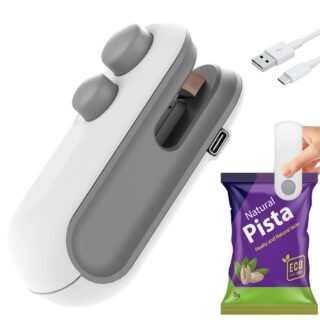 Wazdorf Sealing Clip - Portable Mini Sealing Machine Handheld Packet Sealer for Food, Snacks, Chips, Fresh Storage, Plastic Bag Sealing Machine, Multicolor
Original price was: ₹999.00.₹249.00Current price is: ₹249.00.
Wazdorf Sealing Clip - Portable Mini Sealing Machine Handheld Packet Sealer for Food, Snacks, Chips, Fresh Storage, Plastic Bag Sealing Machine, Multicolor
Original price was: ₹999.00.₹249.00Current price is: ₹249.00.
-
 Raxon Innovation PVC Door Guard (39 Inches, Pack of 5) Gap Filler for Door Bottom Seal Strip - Sound-Proof, Reduce Noise, Energy Saving Door Stopper for Reduce Door Dust, Door Guard for Home(Brown)
Original price was: ₹699.00.₹199.00Current price is: ₹199.00.
Raxon Innovation PVC Door Guard (39 Inches, Pack of 5) Gap Filler for Door Bottom Seal Strip - Sound-Proof, Reduce Noise, Energy Saving Door Stopper for Reduce Door Dust, Door Guard for Home(Brown)
Original price was: ₹699.00.₹199.00Current price is: ₹199.00.