
Reward anticipation in digital product design
Digital solutions prosper when users feel enthusiastic about forthcoming outcomes. Reward anticipation produces emotional participation before individuals get tangible advantages. Designers arrange interactions to build expectation through graphical indicators, advancement cues, and postponed fulfillment.
Platforms exploit expectancy by showing approaching achievements, teasing new features, or displaying partial development. The waiting interval between step and result produces neural engagement similar to getting the reward itself. Successful implementation necessitates comprehending user casino non aams sicuri incentives and timing delivery properly. Offerings that master anticipation systems keep users longer and foster optional return engagements.
What reward expectation means in user experience
Reward expectation signifies the cognitive state individuals enter when anticipating favorable results from virtual engagements. This phenomenon takes place before obtaining response, accessing content, or finishing activities. The brain secretes dopamine during expectation periods, generating enjoyment autonomous of real incentives. User experience designers utilize this system to maintain involvement throughout product experiences.
Expectancy differs from surprise because individuals hold knowledge of likely results. Systems convey upcoming incentives through countdown timers, loading animations, or accomplishment teasers. The anticipatory period often produces stronger affective replies than reward delivery casino online non aams itself, rendering pre-reward points vital for maintenance.
How anticipations affect user conduct
User expectations mold interaction patterns and dictate participation intensity within virtual solutions. When services establish predictable reward frameworks, people alter actions to enhance anticipated outcomes. Transparent expectations reduce cognitive burden and enable concentration on objective accomplishment.
Behavioral modifications develop when users grasp cause-and-effect relationships between steps and incentives:
- Elevated engagement rate when individuals expect everyday bonuses or consecutive benefits
- Elevated completion levels for assignments with observable progress indicators
- Extended discovery period when interfaces suggest at hidden information
- Greater engagement in personalization when users anticipate personalized encounters
Misaligned anticipations create frustration and desertion. People withdraw when actual outcomes differ from predicted results. Designers must calibrate expectation-setting processes to correspond to casino non aams distribution capacities. Exaggerating creates disappointment while underpromising squanders inspirational possibility. Experimentation reveals ideal anticipation thresholds that drive desired behaviors.
The function of feedback and progress signals
Input systems and advancement indicators transform theoretical objectives into tangible advancement signals. These features communicate current condition and distance to intended goals. Visual representations of development preserve incentive during lengthy activities by dividing experiences into manageable segments. Individuals perceive onward progress even when final rewards remain distant.
Successful development systems reveal several dimensions of development simultaneously. Designs might display assignment completion alongside competency improvement or collective standing. Multidimensional response generates deeper anticipation by presenting diverse incentive pathways. The occurrence and specificity of progress modifications affect user casino online non aams tenacity. Designers adjust update intervals to correspond to task difficulty and anticipated finishing timeframes.
How uncertainty can boost participation
Intentional ambiguity boosts user engagement by introducing variability into incentive structures. Varying outcomes create more intense expectancy than guaranteed results because brains reply powerfully to unfamiliar possibilities. This system clarifies why hidden benefits and randomized information preserve interest more successfully than predictable distributions.
Fragmentary data generates inquisitiveness gaps that individuals feel obligated to address. Designs could reveal reward categories without exposing particular items, or show development towards unknown achievements. The strain between recognizing something occurs and not knowing precise specifics fuels discovery conduct.
Fluctuating ratio reward patterns generate particularly enduring participation patterns. Rewards delivered after random step totals generate increased interaction frequencies than fixed patterns. Gaming systems and social communities leverage this rule through automated content distribution. The variability retains users checking migliori casino non aams services repeatedly, hoping every engagement yields positive results. Designers must equilibrate uncertainty with fairness to maintain credibility.
Designing instances that establish expectation
Purposeful design choices generate anticipatory points that amplify affective engagement before reward delivery. Transition sequences, timer progressions, and unveiling dynamics extend the temporal interval between action and outcome. These deliberate pauses change instant gratification into unforgettable encounters that users remember and seek repeatedly.
Visual and audio hints indicate forthcoming rewards and prepare people for favorable consequences. Luminous effects, rising musical sounds, or growing interface components signal impending success. Multi-sensory signals create richer emotional interactions than single-channel communication.
Staged unveiling approaches unveil rewards progressively rather than instantaneously. A treasure box might vibrate before unlocking, or milestone icons may appear behind translucent screens. These brief moments enable expectation to grow organically. The pacing of unveiling series influences understood reward worth. Designers evaluate multiple time lengths to determine ideal casino non aams anticipation windows that maximize enjoyment without annoying individuals through prolonged delay.
The impact of timing and pacing on benefits
Reward timing significantly affects user perception and engagement durability. Quick benefits meet immediate satisfaction requirements but may reduce long-term investment. Postponed benefits build anticipation but threaten user abandonment if waiting periods cross acceptance boundaries. Ideal scheduling equilibrates cognitive satisfaction with deliberate keeping targets.
Rhythm dictates reward distribution rate across user experiences. Front-loaded reward timings deliver benefits rapidly during initialization to establish beneficial links. Incremental pacing spaces incentives more apart as users build habits and internal incentive. This progression stops reward excess while preserving involvement through evolving difficulty stages.
Time-based dynamics create immediacy that accelerates judgment. Temporary promotions, routine entry bonuses, and lapsing occasions drive individuals to interact before forfeiting rewards. The spacing between reward opportunities shapes user migliori casino non aams return patterns, with daily cycles establishing habitual actions. Designers analyze engagement data to match reward scheduling with current behavioral sequences rather than imposing artificial schedules.
Reconciling drive and user fatigue
Sustained participation demands balancing motivational mechanics with user health to avoid exhaustion. Extreme reward frameworks burden individuals with alerts, activities, and decision moments. Burnout arises when intellectual needs outstrip available psychological capacities or when reward pursuit seems compulsory rather than pleasant. Designers must identify excess thresholds where additional rewards diminish experiences.
Strategic break intervals and optional participation paths preserve long-term user bonds. Successful burnout avoidance strategies encompass:
- Creating reward caps that constrain everyday acquisition possibility and promote rests
- Offering skip choices for optional activities without lasting consequences
- Lowering message frequency based on user reply patterns
- Providing passive development systems that progress objectives during absence intervals
Tracking engagement data exposes exhaustion signals such as decreasing engagement time or elevated abandonment levels. The relationship between incentive and fatigue traces inverted patterns, where early reward gains enhance participation until crossing limits that trigger burnout. Designers casino online non aams adjust reward magnitude based on behavioral signals to maintain enduring participation equilibrium.
Ethical factors in incentive-driven design
Reward-based design entails ethical responsibilities beyond engagement enhancement. Manipulative mechanics abuse mental susceptibilities rather than meeting real user needs. Designers must separate between motivation that enhances interactions and abuse that emphasizes business measurements over user welfare. Open practices build credibility while misleading tactics produce temporary advantages at connection costs.
Susceptible populations encompassing children and people with addictive tendencies require additional measures. Reward structures that replicate gambling mechanics generate worries when aiming at susceptible people. Moral guidelines require consent, explicitness about reward probabilities, and limits on outlay or duration investment.
Ethical design reconciles organizational targets with user independence. Products should strengthen rather than manipulate, offering meaningful choices rather than of manufactured coercion. Designers examine whether reward frameworks align with stated casino non aams product values and user benefit. Organizations that emphasize lasting bonds over abusive participation develop stronger standings and evade compliance penalties.
How testing refines reward dynamics
Methodical evaluation uncovers how users respond to reward structures and pinpoints optimization opportunities. A/B testing contrasts different reward timing, rate, and delivery approaches to determine which setups generate targeted behaviors. Data-driven refinement exchanges suppositions with proof about genuine user preferences.
Extended studies monitor involvement patterns over prolonged intervals to assess longevity. Initial enthusiasm about reward frameworks might fade as novelty wanes or burnout builds. Experimentation pinpoints best reward frequencies that preserve incentive without burdening individuals. Behavioral analysis expose how various user groups react to equivalent dynamics, enabling customization. Continuous testing enables designers to improve reward frameworks grounded on developing user migliori casino non aams needs rather than unchanging launch arrangements.

Top rated products
-
 Raj swadist churan
Original price was: ₹250.00.₹200.00Current price is: ₹200.00.
Raj swadist churan
Original price was: ₹250.00.₹200.00Current price is: ₹200.00.
-
 Dell Inspiron 3530 Thin & Light Laptop, 13th Gen Intel Core i3-1305U/8GB/512GB SSD/15.6" (39.62cm) 120Hz Refresh Rate on a FHD IPS Display/Windows 11 + MSO'21+McAfee 15 Month/Carbon Black/1.62kg
Original price was: ₹47,621.00.₹37,886.00Current price is: ₹37,886.00.
Dell Inspiron 3530 Thin & Light Laptop, 13th Gen Intel Core i3-1305U/8GB/512GB SSD/15.6" (39.62cm) 120Hz Refresh Rate on a FHD IPS Display/Windows 11 + MSO'21+McAfee 15 Month/Carbon Black/1.62kg
Original price was: ₹47,621.00.₹37,886.00Current price is: ₹37,886.00.
-
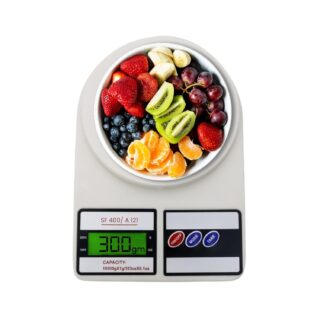 Atom 10Kg Kitchen Weight Machine 6 Months Warranty, Digital Scale with LCD Display, Scale for Home Baking, Cooking & Balance Diet. Weighing Machine with capacity 10Kg
Original price was: ₹599.00.₹205.00Current price is: ₹205.00.
Atom 10Kg Kitchen Weight Machine 6 Months Warranty, Digital Scale with LCD Display, Scale for Home Baking, Cooking & Balance Diet. Weighing Machine with capacity 10Kg
Original price was: ₹599.00.₹205.00Current price is: ₹205.00.
-
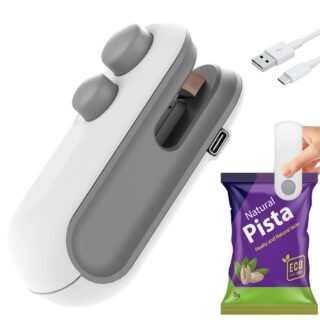 Wazdorf Sealing Clip - Portable Mini Sealing Machine Handheld Packet Sealer for Food, Snacks, Chips, Fresh Storage, Plastic Bag Sealing Machine, Multicolor
Original price was: ₹999.00.₹249.00Current price is: ₹249.00.
Wazdorf Sealing Clip - Portable Mini Sealing Machine Handheld Packet Sealer for Food, Snacks, Chips, Fresh Storage, Plastic Bag Sealing Machine, Multicolor
Original price was: ₹999.00.₹249.00Current price is: ₹249.00.
-
 Raxon Innovation PVC Door Guard (39 Inches, Pack of 5) Gap Filler for Door Bottom Seal Strip - Sound-Proof, Reduce Noise, Energy Saving Door Stopper for Reduce Door Dust, Door Guard for Home(Brown)
Original price was: ₹699.00.₹199.00Current price is: ₹199.00.
Raxon Innovation PVC Door Guard (39 Inches, Pack of 5) Gap Filler for Door Bottom Seal Strip - Sound-Proof, Reduce Noise, Energy Saving Door Stopper for Reduce Door Dust, Door Guard for Home(Brown)
Original price was: ₹699.00.₹199.00Current price is: ₹199.00.