
The Psychology of Anticipation in Visitor Interaction
Anticipation forms how customers view virtual products before contact occurs. The person’s brain perpetually forecasts results founded on sight-based cues, interface structures, and prior experiences. This mental procedure influences contentment measures and participation intensity. Designers utilize anticipation to build feeling-based ties between visitors and products. Grasping psychological systems behind expectancy permits groups to construct interfaces that feel intuitive and satisfying in casino non aams.
Why expectancy counts before a customer even takes action
The instant a visitor meets an design, the mind begins creating anticipations about prospective interactions. These psychological forecasts take place milliseconds before any press or press occurs. Psychological mechanisms assess graphical structure, color schemes, and geometric relationships to ascertain what actions might generate intended results.
Research shows that obvious visual signals decrease cognitive load by verifying customer siti non aams predictions. When element positioning aligns with learned structures, customers face decreased friction. The gap between predicted and actual results dictates contentment levels after interaction finishes.
Predictive states also activate reward circuits in the mind. Chemicals discharge during prediction phases, producing psychological investment before results materialize. This brain-based response clarifies why well-crafted buffering states sustain involvement better than blank screens.
How expectation forms affective reaction in electronic products
Affective reactions to digital items stem from the connection between what users expect and what really takes place. When results align with forecasts, customers encounter contentment and confidence. Incompatible predictions provoke irritation that undermines product perception. The psychological effect depends on expectation precision rather than function quality alone.
Positive delights happen when items exceed anticipated execution standards. A faster-than-expected load time generates pleasure because the organ prepared for prolonged delay periods in casino online non aams. Surprising useful capabilities create beneficial psychological surges that create positive associations with products.
Unfavorable psychological reactions arise when designs break established cognitive frameworks. A element that looks clickable but remains inactive creates disappointment. Motion rates that differ from platform conventions feel jarring. These breaches shatter mental contracts between visitors and systems.
The part of unpredictability in maintaining customers mentally involved
Uncertainty operates as a powerful attention mechanism when adjusted correctly within digital journeys. Total certainty results in casino non aams to boredom, while undue randomness triggers unease. The best uncertainty level preserves concentration without overwhelming mental capacities. Deliberate uncertainty maintains customers intrigued about results and engaged in exchange processes.
Gamification systems demonstrate how managed ambiguity sustains involvement over lengthy periods. Variable prize timings produce more powerful conduct-based patterns than fixed results. Customers persist interacting because they cannot forecast precise consequences, yet they trust that positive outcomes remain feasible.
Productive unpredictability application follows specific guidelines:
- Offer distinct parameters around variable elements so users understand which dimensions stay stable
- Maintain stability in fundamental movement structures while incorporating variation in content or rewards
- Use incremental disclosure to show information progressively rather than swamping customers instantly
Why delay can intensify attention as opposed to of reducing it
Delay durations can enhance visitor curiosity when constructed with cognitive rules in mind. The mind attributes higher value to consequences that need work or endurance to obtain. Immediate fulfillment typically creates less strong emotional answers than deferred rewards. This effect arises from expectancy developing emotional investment during delay durations.
Chronological gap allows users to picture ideal results without encountering reality restrictions. During waiting intervals casino online non aams, cognitive projections incline toward positive scenarios that boost perceived value. A item appearing after various periods feels more valuable than identical items obtained at once.
Deliberate waits also communicate standard and exclusivity signals. Time-restricted offers combined with countdown counters exploit scarcity thinking to heighten interest. Users interpret delay conditions as signals of elevated demand or excellent craftsmanship.
How systems generate a feeling of what arrives subsequently
Interfaces communicate forthcoming phases through sight-based language that directs user predictions. Pointing cues like arrows, motion paths, and positional layouts indicate approaching shifts. These design elements produce mental patterns of cause-and-effect relationships within digital systems.
Hue changes and hover conditions preview interactive options before commitment occurs. A button altering hue on hover confirms clickability and implies responsiveness. Inactive elements appear faded out to communicate unavailability. These visual changes train users migliori casino non aams to detect designs that forecast system behavior.
Sequential browsing designs establish rhythm and predictability in user paths. Breadcrumb paths show completed steps and leftover stages at once. Multi-step questionnaires display progress indicators that anticipate finishing closeness. Individual element provides to time-based understanding that assists users forecast task timeframe and next necessary actions.
Microinteractions as triggers of expectancy
Microinteractions function as predictive indicators that prime visitors for platform responses. These minor animated feedback loops confirm entry registration and hint at processing tasks. A button press that initiates a spreading effect conveys acknowledgment before the core action finishes. Such instant response avoids uncertainty about whether the platform recorded user intent.
Pull-to-refresh motions exemplify how small interactions build expectancy through gradual revelation. The expanding animation during the drag stage creates anticipation for updated information. Sight-based strain gathers as customers pull down, then dissipates when the refresh limit triggers. This physical metaphor transforms waiting into an engaged interactive journey rather than detached observation.
Productive micro-animations include multiple expectant parts:
- Entrance movements that preview information appearance before components fully display on display
- Loading indicators with fluctuating speeds that suggest execution difficulty and predicted completion period in migliori casino non aams
- Tactile acknowledgment that validates touch registration and displays operation results through pulse sequences
- Audio indicators that support visual feedback and generate cross-sensory anticipation of outcomes
The connection between anticipation and prize perception
Expectation enhances reward perception through neurochemical processes that start before consequences emerge. Dopamine discharge takes place during anticipation stages rather than only upon prize receipt. This signifies the journey toward a objective creates pleasure separately of the destination. Designs that lengthen predictive periods can boost overall fulfillment past what the actual reward generates.
The gap between expected and obtained rewards dictates psychological strength. When results exceed anticipations, users migliori casino non aams experience elevated satisfaction that reinforces item bond. Conversely, rewards falling under of predictions appear frustrating even when objectively valuable.
Changing reward scheduling produces more robust expectant answers than expected sequences. Alert systems that arrive at unpredictable intervals sustain greater engagement than set-time notifications. The variability preserves attention because visitors cannot adapt to established structures.
How development measures shape drive and patience
Development measures convert abstract waiting intervals into solid visual paths that preserve customer motivation. A processing meter transmits both active status and outstanding timeframe, permitting visitors to form knowledgeable judgments about continuing or abandoning jobs. Observable advancement generates mental drive that motivates activity conclusion.
The goal-gradient phenomenon illustrates why users intensify attempts as progress signals near conclusion. Sight-based proximity to destinations triggers heightened involvement and patience. A advancement meter at 80% seems significantly tighter to finishing than one at 20%, even when actual period remaining continues unchanged.
Divided progress visualizations lower apparent effort by splitting big tasks into tinier checkpoints. A sequential process with finished steps marked appears more controllable than a single continuous meter. Every done segment delivers small rewards that preserve determination across prolonged workflows casino online non aams.
Affective tempo in user paths
Emotional rhythm orchestrates the flow of anticipation and release during customer experiences. Creators control intensity changes by switching between high-engagement points and rest periods. A properly-rhythmed journey prevents affective fatigue while preserving sufficient engagement to preserve curiosity.
Introduction flows show productive emotional tempo through incremental complexity unveiling. First screens show simple activities that develop self-belief through rapid victories. Following stages introduce advanced functions progressively, permitting visitors to anticipate expertise without sensing swamped.
Payment processes require thoughtful tempo to maintain purchase impetus while handling necessary obstacles spots. Expectancy grows as visitors move toward purchase completion, but excessive phases exhaust eagerness. Best pacing merges necessary data into least phases while utilizing advancement indicators to reinforce proximity to target accomplishment in casino non aams.

Top rated products
-
 Raj swadist churan
Original price was: ₹250.00.₹200.00Current price is: ₹200.00.
Raj swadist churan
Original price was: ₹250.00.₹200.00Current price is: ₹200.00.
-
 Dell Inspiron 3530 Thin & Light Laptop, 13th Gen Intel Core i3-1305U/8GB/512GB SSD/15.6" (39.62cm) 120Hz Refresh Rate on a FHD IPS Display/Windows 11 + MSO'21+McAfee 15 Month/Carbon Black/1.62kg
Original price was: ₹47,621.00.₹37,886.00Current price is: ₹37,886.00.
Dell Inspiron 3530 Thin & Light Laptop, 13th Gen Intel Core i3-1305U/8GB/512GB SSD/15.6" (39.62cm) 120Hz Refresh Rate on a FHD IPS Display/Windows 11 + MSO'21+McAfee 15 Month/Carbon Black/1.62kg
Original price was: ₹47,621.00.₹37,886.00Current price is: ₹37,886.00.
-
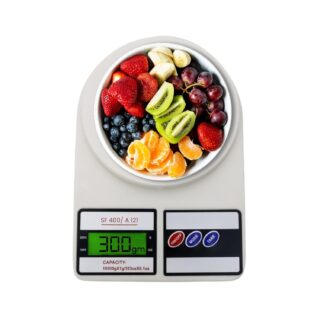 Atom 10Kg Kitchen Weight Machine 6 Months Warranty, Digital Scale with LCD Display, Scale for Home Baking, Cooking & Balance Diet. Weighing Machine with capacity 10Kg
Original price was: ₹599.00.₹205.00Current price is: ₹205.00.
Atom 10Kg Kitchen Weight Machine 6 Months Warranty, Digital Scale with LCD Display, Scale for Home Baking, Cooking & Balance Diet. Weighing Machine with capacity 10Kg
Original price was: ₹599.00.₹205.00Current price is: ₹205.00.
-
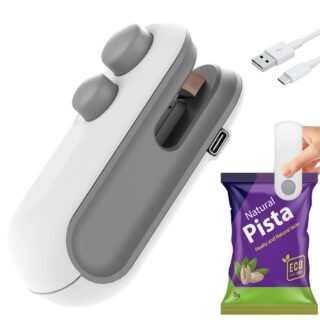 Wazdorf Sealing Clip - Portable Mini Sealing Machine Handheld Packet Sealer for Food, Snacks, Chips, Fresh Storage, Plastic Bag Sealing Machine, Multicolor
Original price was: ₹999.00.₹249.00Current price is: ₹249.00.
Wazdorf Sealing Clip - Portable Mini Sealing Machine Handheld Packet Sealer for Food, Snacks, Chips, Fresh Storage, Plastic Bag Sealing Machine, Multicolor
Original price was: ₹999.00.₹249.00Current price is: ₹249.00.
-
 Raxon Innovation PVC Door Guard (39 Inches, Pack of 5) Gap Filler for Door Bottom Seal Strip - Sound-Proof, Reduce Noise, Energy Saving Door Stopper for Reduce Door Dust, Door Guard for Home(Brown)
Original price was: ₹699.00.₹199.00Current price is: ₹199.00.
Raxon Innovation PVC Door Guard (39 Inches, Pack of 5) Gap Filler for Door Bottom Seal Strip - Sound-Proof, Reduce Noise, Energy Saving Door Stopper for Reduce Door Dust, Door Guard for Home(Brown)
Original price was: ₹699.00.₹199.00Current price is: ₹199.00.